
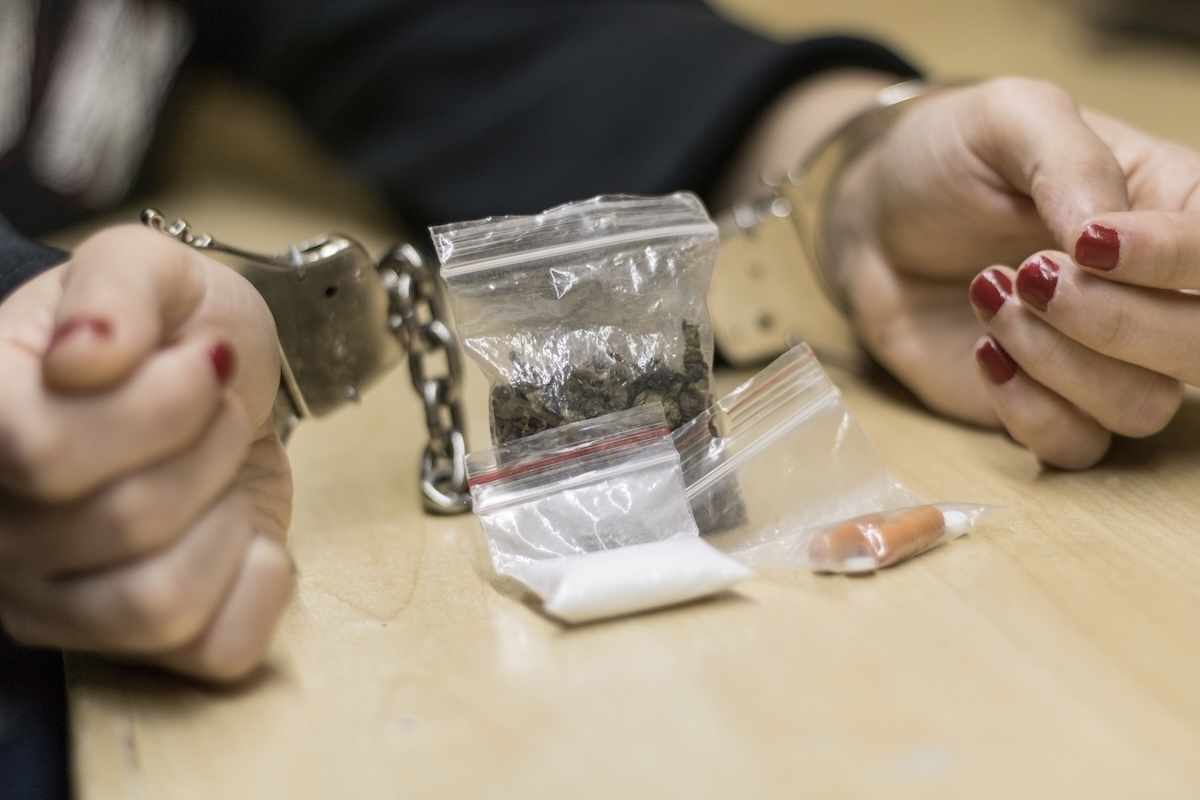
Drug charges in Texas can leave you with questions about what the allegations mean, how the criminal process works, and what options you may have moving forward. A Houston drug crime lawyer can help you understand the accusations against you, protect your constitutional rights, and build a defense strategy based on the specific facts of your case.
At Walter J. Pink & Associates, PC, we understand how frightening and confusing the criminal justice system can feel. For more than 50 years, our firm has defended Texans through three generations of legal advocacy. Civil rights advocate Walter Jerome Pink founded the firm after witnessing injustice within his community and dedicating his career to protecting vulnerable people. We believe every person deserves fairness, dignity, and aggressive legal representation when confronting the power of the State.
What Does a Drug Crime Defense Attorney Do?
A drug crime defense attorney helps clients by:
- Investigating the circumstances surrounding the arrest,
- Reviewing whether police violated constitutional protections,
- Challenging unlawful searches or traffic stops,
- Examining laboratory testing procedures,
- Negotiating with prosecutors,
- Representing clients during hearings and trials,
- Seeking reduced charges or case dismissals, and
- Advising clients about plea agreements and sentencing risks.
Working with an experienced Houston drug defense attorney can help you understand what prosecutors must prove and what legal defenses may apply.
What Drug Charges Does a Houston Drug Crime Lawyer Handle?
Texas law declares possession of many substances to be illegal, including:
- Marijuana,
- Cocaine,
- Heroin,
- Methamphetamine,
- Fentanyl,
- Ecstasy,
- LSD,
- Prescription opioids, and
- Xanax
The offense the State charges you with depends on the quantity and type of drug, as well as the circumstances surrounding the arrest.
Possession
When the State charges you with possession, it claims you knowingly or intentionally possessed a controlled substance without legal authorization. In many cases, the central dispute involves whether the defendant actually knew about the drugs or exercised control over them. Several factors usually determine the severity of a possession charge, including the type of drug and the amount prosecutors allege the defendant possessed.
Possession with Intent to Deliver
The State may charge you with possession with intent to deliver if it concludes the circumstances suggest that you intended to distribute drugs to another person.
Prosecutors may support intent allegations with evidence such as:
- Large quantities of drugs,
- Packaging materials,
- Digital scales, and
- The presence of multiple containers or baggies.
A drug crime lawyer in Houston can help you raise counterarguments, such as evidence that the substance was only for personal use.
Delivery and Distribution
Texas law prohibits knowingly delivering controlled substances to another person. Delivery allegations may involve selling, transporting, transferring, or offering to sell drugs under certain circumstances.
Drug Paraphernalia
Texas law also criminalizes possession and use of drug paraphernalia and equipment. It broadly defines drug paraphernalia to include items prosecutors believe someone used or intended to use for storing, packaging, weighing, ingesting, manufacturing, or distributing controlled substances. The State may add paraphernalia charges to other charges, such as possession or manufacturing of drugs.
Manufacturing
Drug manufacturing charges involve allegations that someone produced, prepared, processed, or cultivated controlled substances. Prosecutors may rely on evidence such as:
- Chemical ingredients,
- Laboratory equipment,
- Production instructions,
- Residue testing, and
- Surveillance evidence.
Depending on the substance, possession of equipment used in the manufacturing process may be a crime in itself.
Trafficking
Drug trafficking generally refers to larger-scale transportation or distribution allegations involving substantial quantities of controlled substances or organized activity. Some trafficking cases remain in Texas state court, while federal authorities prosecute others.
How Does the Criminal Defense Process Work?
A criminal case often begins with an arrest after a traffic stop, investigation, warrant execution, or police encounter. During booking, law enforcement officers record identifying information, take fingerprints and photographs, and formally document the charges against you.
Bail and Release
After an arrest, a judge may set bail, allowing you to stay out of jail while the criminal case proceeds. When deciding whether to release you on bail and how much to require you to pay, judges commonly consider factors such as:
- The seriousness of the allegations,
- Prior criminal history,
- Community ties,
- Alleged flight risk, and
- Public safety concerns.
A drug crime attorney in Houston may argue for lower bail amounts or less restrictive release conditions.
Arraignment and Initial Court Appearances
At an arraignment or initial hearing, the court formally notifies you of the charges and requests a plea. Most defendants plead not guilty while their attorney reviews the evidence and investigates the allegations.
Investigation and Discovery
During discovery, the prosecution and defense exchange evidence relevant to the case. The parties review evidence such as:
- Police reports,
- Laboratory testing results,
- Surveillance footage,
- Witness statements,
- Search warrant documents, and
- Body camera footage.
A criminal defense attorney reviews this evidence to identify constitutional violations, unreliable witness statements, or forensic issues.
Pretrial Motions
Defense attorneys frequently file motions challenging how law enforcement officers obtained evidence. We may challenge:
- Illegal searches,
- Improper traffic stops, and
- Unlawful interrogations.
We may also raise chain-of-custody challenges, meaning questioning whether law enforcement handled the evidence properly.
Plea Negotiations
Many criminal cases resolve through negotiated plea agreements. Depending on the circumstances, prosecutors may agree to:
- Reduced charges,
- Diversion programs,
- Deferred adjudication, or
- Community supervision.
Your lawyer can negotiate with prosecutors in pursuit of a more favorable outcome.
Trial
If the case does not resolve through negotiation, the State proceeds to trial. At trial, prosecutors must prove your conduct meets every legal element of the criminal charges against you beyond a reasonable doubt. A Houston drug crime lawyer works to challenge the State’s evidence and arguments throughout the process.
What Are the Consequences of Drug Crime Convictions?
If the State convicts you of a drug crime, Texas courts may impose criminal penalties, and the conviction may also create long-term collateral consequences. A drug crime lawyer may help you minimize or manage those consequences.
Direct Consequences
Many Texas drug offenses carry jail or prison sentences and fines. Several factors influence the length of incarceration, including:
- The type of substance involved,
- The quantity,
- Whether you have a prior criminal history, and
- The specific conduct for which you were arrested.
Lower-level offenses sometimes qualify as misdemeanors, which may carry potential penalties ranging from fines to up to one year in county jail. More serious allegations may qualify as state jail felonies and carry a confinement range of 180 days to 2 years in a state jail facility.
Some higher-level felony charges carry potential prison terms ranging from 2 to 20 years, while the most serious trafficking allegations may result in sentences ranging from 5 to 99 years or life imprisonment.
Collateral Consequences
Depending on the circumstances, a conviction may affect:
- Employment opportunities,
- Housing applications,
- Professional licenses,
- Educational opportunities,
- Driver’s license privileges, and
- Immigration status.
For noncitizens, drug convictions may also create immigration issues that lead directly to removal (deportation) proceedings.
Alternative Sentencing Programs
Some defendants may qualify for alternatives to incarceration. These programs often focus on rehabilitation and supervision. Possible alternatives may include:
- Drug court programs,
- Rehabilitation treatment,
- Deferred adjudication,
- Diversion programs, and
- Community supervision.
Courts often determine eligibility for alternative sentencing based on criminal history, the alleged offense, and a defendant’s willingness to comply with treatment requirements. Your defense lawyer can help you understand whether you qualify for an alternative program.
How Can a Houston Drug Defense Attorney Help Reduce or Dismiss Charges?
Every drug case presents different factual and legal issues. Your lawyer can help you create a defense strategy that may reduce charges or potentially result in dismissal. Defense strategies depend on how law enforcement officers conduct the investigation, how prosecutors interpret the evidence, and whether officers violated constitutional protections during the process.
Illegal Search and Seizure
The Fourth Amendment protects people from unreasonable searches and seizures by law enforcement. A defense attorney may challenge:
- Warrantless searches,
- Invalid search warrants,
- Improper vehicle searches, and
- Unlawful traffic stops.
If officers violate constitutional protections, the court may exclude related evidence so officers cannot rely on it to prove your guilt.
Failure to Meet Legal Elements
Prosecutors have the burden of presenting enough evidence to the judge or jury to convince them of your guilt beyond a reasonable doubt. To defend against the State’s case, your attorney may argue, for example:
- Another person possessed the drugs,
- You lacked knowledge of the substance, or
- The evidence indicates personal use rather than distribution.
Raising doubts about the reliability of the prosecution’s evidence is a central part of the defense attorney’s role. For example, drug prosecutions frequently depend on forensic testing to identify controlled substances. Testing errors, contamination, or evidence-handling problems may limit the reliability of the prosecution’s evidence.
Constitutional Violations During Interrogation
Police officers must respect constitutional protections during questioning and custodial interrogation. Defendants generally have the right to remain silent and the right to speak with an attorney before answering questions. If police unlawfully obtain statements, prosecutors may not use them at trial.
How Much Does a Drug Crime Defense Attorney Cost?
The cost of hiring a Houston drug defense attorney depends on several factors, including the seriousness of the charge, whether the case involves felony allegations, and how much time and work your lawyer needs to put into the case. Lower-level misdemeanor cases often cost less than complex felony or trafficking prosecutions.
Many firms also structure fees differently depending on whether the case resolves through negotiation or proceeds to trial.
Frequently Asked Questions
1. Can a Houston drug crime lawyer help me fight a possession charge?
Yes. A Houston drug crime lawyer can investigate the circumstances of the arrest, review the evidence, and determine whether there are grounds to challenge the possession allegation. Depending on the facts, the defense may challenge possession, knowledge, the legality of the search, or the reliability of the evidence.
2. Can an attorney defend me against possession with intent to distribute charges?
Yes. Walter J. Pink & Associates, PC handles serious drug allegations, including possession with intent to deliver. An attorney can examine the evidence prosecutors are using to claim intent to distribute, including the quantity of drugs, packaging, scales, or other evidence, and develop a defense based on the specific circumstances of your case.
3. Can a drug crime attorney challenge drugs found during a traffic stop?
Potentially. If drugs were discovered during a traffic stop, your attorney can review whether the stop, search, detention, or seizure complied with constitutional requirements. If law enforcement violated your rights, your lawyer may be able to seek exclusion of evidence obtained through an unlawful search or seizure.
4. Can a lawyer challenge the results of a drug test in a criminal case?
Yes. A defense attorney can examine how the alleged controlled substance was collected, stored, transported, and tested. Laboratory procedures, testing methods, contamination concerns, and chain-of-custody issues may provide grounds to challenge the reliability or admissibility of drug evidence.
5. Can a Houston drug defense lawyer help me if I was charged with a prescription drug offense?
Yes. Prescription drug cases can involve allegations concerning possession, unauthorized use, distribution, or obtaining controlled substances improperly. An attorney can review the prescription history, medical records, evidence obtained by law enforcement, and the specific allegations to determine an appropriate defense strategy.
6. Can a drug crime lawyer help reduce a felony drug charge?
In some cases, an attorney may be able to negotiate for reduced charges or another resolution depending on the evidence, alleged offense, criminal history, and other circumstances. Your lawyer can evaluate the prosecution’s case and negotiate with prosecutors while protecting your legal interests.
7. Can a Houston drug defense attorney help me pursue drug court or another alternative to jail?
Possibly. Depending on the offense, criminal history, and eligibility requirements, some defendants may qualify for drug court, diversion, rehabilitation, deferred adjudication, or community supervision. A drug defense attorney can assess your case and advise you about potentially available alternatives.
8. Do I need a lawyer for a first-time drug offense in Houston?
You should seriously consider obtaining legal representation even for a first-time drug offense. The consequences can depend on the substance, quantity, charge, and circumstances of the arrest. An attorney can evaluate whether dismissal, diversion, reduced charges, or another favorable resolution may be available.
9. Can a Houston drug crime lawyer help if the police found drugs in a vehicle I was driving?
Yes. When drugs are found in a vehicle, important questions can include who owned or controlled the vehicle, who knew about the substance, where it was located, and whether police legally searched the vehicle. A defense attorney can investigate these circumstances and challenge the prosecution’s evidence when appropriate.
10. Can I hire a Houston drug crime attorney for a federal drug charge?
Yes. Some drug cases are prosecuted federally rather than in Texas state court. Federal drug prosecutions can involve different procedures, agencies, and potential penalties. Walter J. Pink & Associates, PC handles federal criminal matters and can evaluate whether the firm is able to represent you based on the specific allegations and circumstances of your case.
Protect Your Rights with Walter J. Pink & Associates, PC
A Houston drug defense lawyer can help you understand your rights, evaluate the evidence against you, and build a strategy tailored to your circumstances.
At Walter J. Pink & Associates, PC, we have spent more than 50 years defending Texans against serious criminal charges. Our multi-generational firm has handled thousands of criminal matters and conducted hundreds of trials, fighting for justice in Texas courtrooms.
If you need a Houston drug crime lawyer, contact Walter J. Pink & Associates, PC today.
Legal References Used to Inform This Page
To ensure the accuracy and clarity of this page, we referenced official legal resources during the content development process: